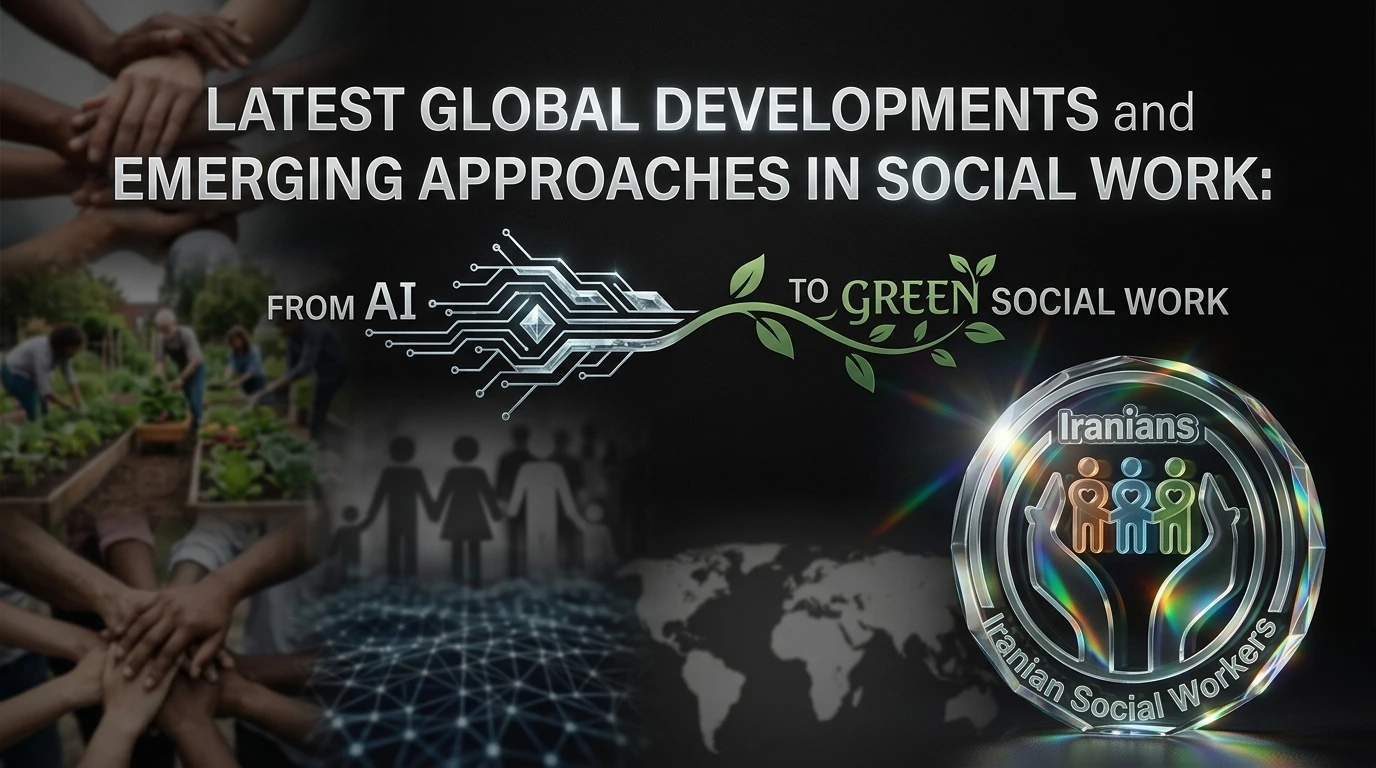
Latest Global Developments and Emerging Approaches in Social Work
A comprehensive review of the latest news, achievements, and innovative approaches in social work globally. Exploring the integration of AI, the role of social workers in climate crises, new policies by the International Federation of Social Workers (IFSW), and strategies to combat burnout among social work professionals.
A Paradigm Shift in Global Social Work
In recent years, the social work profession has undergone fundamental changes driven by rapid technological advancements, climate disruption, and emerging socioeconomic crises. International bodies, including the International Federation of Social Workers (IFSW) and the International Association of Schools of Social Work (IASSW), are emphasizing resilient, justice-oriented, and innovative approaches more than ever before.
This news report analyzes the key pillars and most transformative recent developments in social work across the globe.
The AI Revolution and Digital Social Work
One of the most discussed topics in academic and practice circles is the integration of Artificial Intelligence (AI) and digital tools into social support service delivery.
- Predictive Analytics: Support agencies in countries such as the UK and Australia leverage AI algorithms for early identification of households and children at high risk of social harm or extreme poverty.
- Accessibility via Tele-Social Work: Following the stabilization of online infrastructure, remote social work has become an official standard for rural and underserved areas in North America and Europe.
- Ethical Considerations and Data Privacy: Global organizations have established strict guidelines for client data confidentiality in AI environments to ensure algorithms do not perpetuate racial or socioeconomic bias.
Featured Headline: How Artificial Intelligence Is Assisting Social Workers in Early Harm Detection
The Rise of Green Social Work and Climate Crisis Response
With the increasing frequency of natural disasters, droughts, and climate-induced migration, Green / Eco-Social Work has become a central pillar of social welfare strategies.
- Supporting Climate Refugees: Social workers in regions like Southeast Asia and Africa are on the front lines of disaster response, leading psychosocial recovery and community resettlement programs.
- Distributive and Climate Justice: With growing awareness that low-income and minority communities suffer disproportionately from environmental crises, social workers are increasingly taking on active roles in environmental policy advocacy.
Prioritizing Mental Health and Combating Burnout
Heavy workloads and constant exposure to secondary trauma pose significant threats to the mental health of social workers worldwide.
- New Protective Legislation: Governments across several European and American nations have passed new legislation to reduce working hours, increase pay, and require organizations to provide mandatory self-care programs and free counseling for social workers.
- Workforce Shortages and International Action: The global shortage of qualified social workers has led regional federations to streamline credential recognition processes and recruit international professionals under equitable conditions.
International Crisis Intervention and Trauma-Informed Migration Care
Geopolitical crises and large-scale population movements highlight the urgent need for enhanced professional approaches when serving refugees and displaced populations.
- Culturally Responsive Care: International organizations are training social workers in Trauma-Informed Care principles to facilitate the social integration of migrants with minimal psychological impact.
- Transnational Cooperation: Cross-border social work networks are becoming increasingly active in tracking unaccompanied minors in migration streams and preventing human trafficking.
Strategic Priorities of the International Federation of Social Workers (IFSW)
The IFSW reinforces its key framework around “Structural Change for a Shared and Sustainable Future.” Recent major resolutions and recommendations include:
- Indigenization of Social Work: Respecting local knowledge and community-based approaches to social issues rather than imposing standardized Western models.
- Strengthening Policy Advocacy: Shifting the role of social workers from mere service providers to active Social Advocates working to reform discriminatory laws.
- Expanding Continuous Education: Updating university curricula to include digital skills, human rights, and disaster management.
Summary Table: Key Trends in Global Social Work
| Dimension | Traditional Approach | Emerging Modern Approach |
| Technology | Paper files & manual evaluation | Data analytics with AI & platform services |
| Environment | Disregard of climate factors | Green social work & environmental risk management |
| Intervention Method | Individualized & reactive treatment | Structural, preventive & community-centered |
| Practitioner Wellbeing | Ignoring occupational burnout | Mandatory self-care laws & organizational support |
Conclusion and Outlook
Globally, social work is no longer merely a reactive support profession; it has evolved into a sophisticated discipline sitting at the intersection of technology, social justice, mental health, and environmental sustainability. Nations and organizations that proactively align their educational and operational frameworks with these global trends will lead the way in social welfare delivery.
Prepared by the Editorial Team at Welfare & Social Work News